Receive Stablecoins from Customers
Let customers deposit or pay using stablecoins, then settle into fiat so your revenue stays predictable.
What this Solves
• Card limits and declines restrict customer payments
• Cross border users need a payment method that works reliably across regions
• Finance teams need predictable settlement amounts for reconciliation
How it works with Payhound
You choose invoices for fixed value payments or channels for recurring deposit
The customer pays in stablecoin or crypto
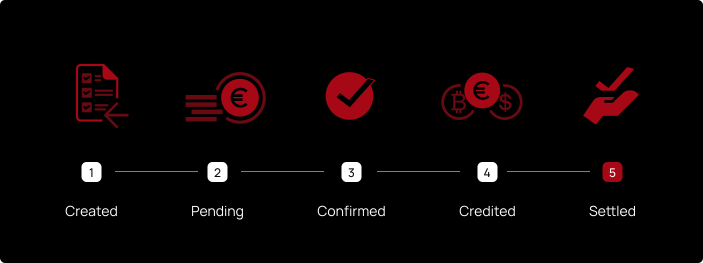
You receive transaction status updates and reporting
You settle in fiat based on your configuration
Receive Settlements from Partners
Collect stablecoin settlements from affiliates, partners, or local payment partners, then use them for treasury, payouts, or conversion.
What this Solves
• Partner settlements that are slow due to correspondent banking chains
• Reconciliation issues caused by inconsistent payment references
Create a fixed invoice for a specific amount, or provide a dedicated channel address for ongoing settlements
Partners send USDC or other supported assets
You convert to fiat instantly or keep stablecoin balances based on policy

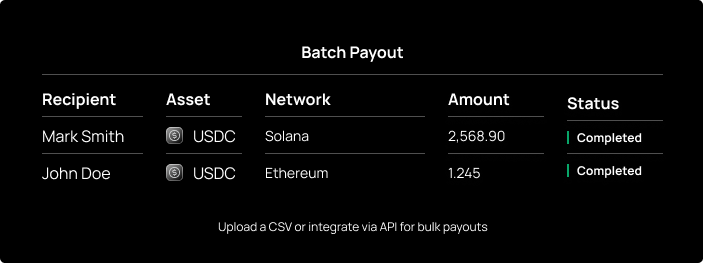
Send Payouts and Mass Payouts
Pay many recipients using stablecoins or crypto from one batch, with exports that finance teams can reconcile.
What this Solves
• Manual payout processes that do not scale
• Cross border recipients who expect a stable payout value
• Inconsistent reporting at audit time or month end close
How it works with Payhound
Upload a CSV or integrate via API for bulk payouts
Send payouts with tracking and downloadable reporting.
Cross Border Business Payments
Use stablecoins as cross border rails when speed and predictability matter.
Adoption
Traditional cross border payments still face cost and speed issues in many corridors. The ECB noted that costs remain high in many corridors and a share of retail cross border payments still take more than one business day.
FSB progress reporting also shows targets are challenging to meet, and Reuters reported the G20 effort is likely to miss its 2027 target.
01 | Getting Started with Payhound
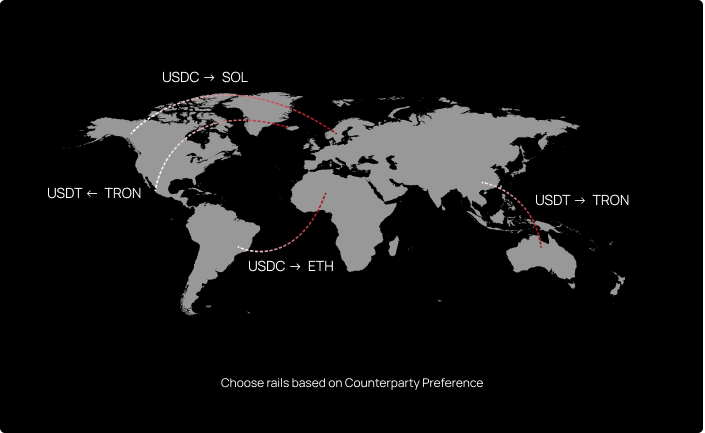
Choose rails based on counterparty preference
Convert to FIAT when required
02 | Choose your Flow
What are you trying to do?
Make Selection
What are you trying to do?

03 | Supported Stablecoins and Rails
Use the rails your clients already use

USDC

EU/EEA Inclusive
Clients already on Ethereum
USDC
EU/EEA Inclusive
Clients Need Speed + Low Fees

USDT

EU/EEA Exclusion
USDT
EU/EEA Exclusion
USDT
EU/EEA Exclusion
04 | Make your Business Case
Use the rails your clients already use

Stablecoin Volume is now Payment Scale
Bloomberg reported total stablecoin transaction volume rose to about 33 trillion in 2025 based on Artemis Analytics data.

Market Structure is Concentrated
Coin Metrics reported USDT and USDC remain the largest by market share, with stablecoin market cap around 280 billion in late 2025.
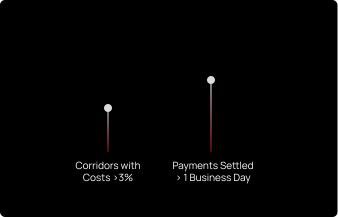
Cross Border Friction is Still Real
ECB commentary highlighted ongoing issues with cost and speed in retail cross border payments.

Stablecoins are used as a Transactional Medium
BIS research finds stablecoins and low value BTC flows are linked to remittance costs and transactional use, not only speculation.
05 | Design Choices and Risk, Written in Plain Language
CPMI notes that stablecoin arrangements depend heavily on design choices, including the peg currency and the quality of on and off ramps between stablecoins and the financial system.
06 | Integration and Reporting
You get transaction status updates, references per payment, and reporting exports designed for reconciliation. Payhound’s crypto payment processing page already positions fixed rate invoices and unique wallet addresses for one time transactions.
For mass payouts, your affiliate page already highlights CSV upload or API integration.